Baroque, Ethnic Music, Film Score, Folk Music, Free Sheet Music, Intermediate Cellists, Online Purchase
First published on Aug 1, 2024 by Seb
Last updated on Mar 14, 2026 by Seb
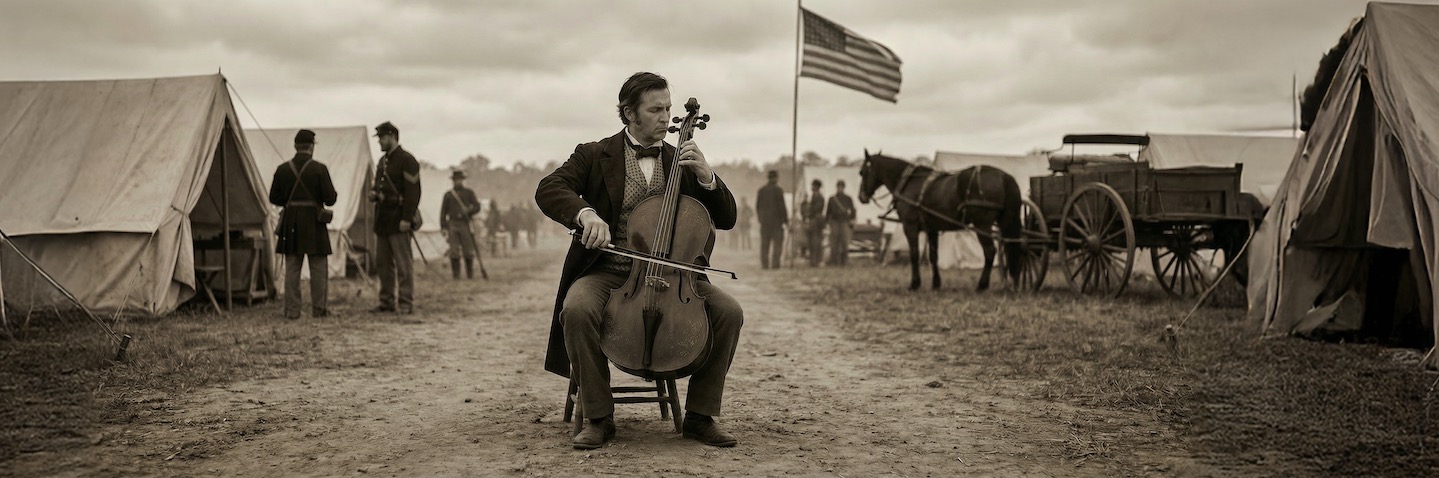
You’ve heard Ashokan Farewell even if you don’t think you know it. You’ve heard it in a TV show, a film, or a documentary about the Civil War. Chances are, if someone played you the first bar, you could hum the rest.
What if one were to write a somewhat Baroque-sounding variation of Ashokan Farewell, as a self-accompanied cello music?
But first, let’s hear the original from Jay Ungar, the composer himself, accompanied by his family.
The recomposer initially intended to write a whole set of variations on the theme. That never quite happened. In the end, only the very first “variation” was finished.
Calling it a variation might even be a bit generous. So far, no one has been able to clearly hear Ashokan Farewell hiding inside Barokan Farewell.
It’s probably more accurate to call it new music inspired by Ashokan Farewell. Judge for yourself: the original tune is on the left, and the Barokan version is on the right. As usual, this composer asks to be forgiven for his lack of intonation. He invites real cellists to record this music as replacements for makeshift recordings currently shown below.
That musical debt becomes more obvious once you look at the sheet music. The first part was transcribed from Jay’s playing, mostly from the video above. But since he never plays it exactly the same way twice, other recordings were consulted as well, including from this album.
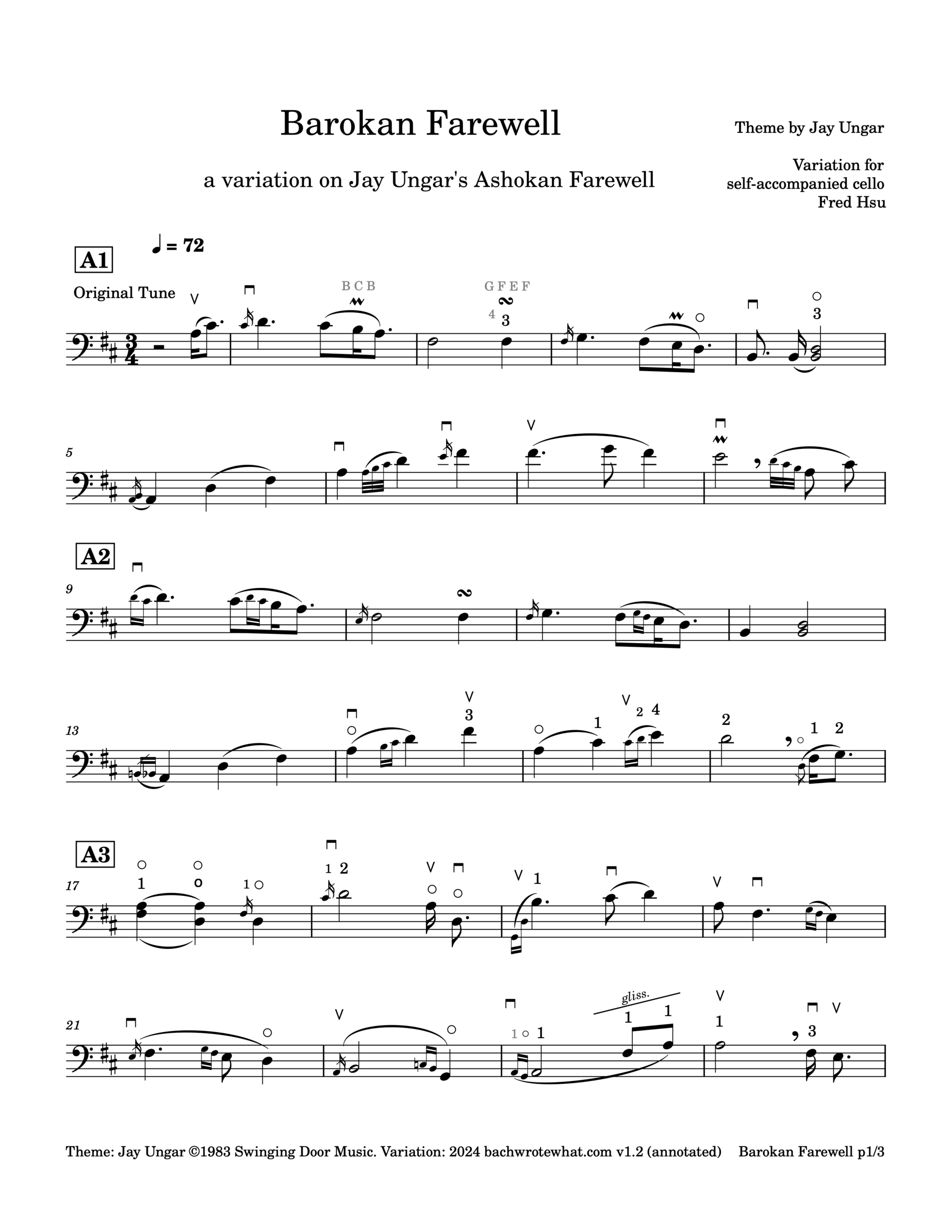
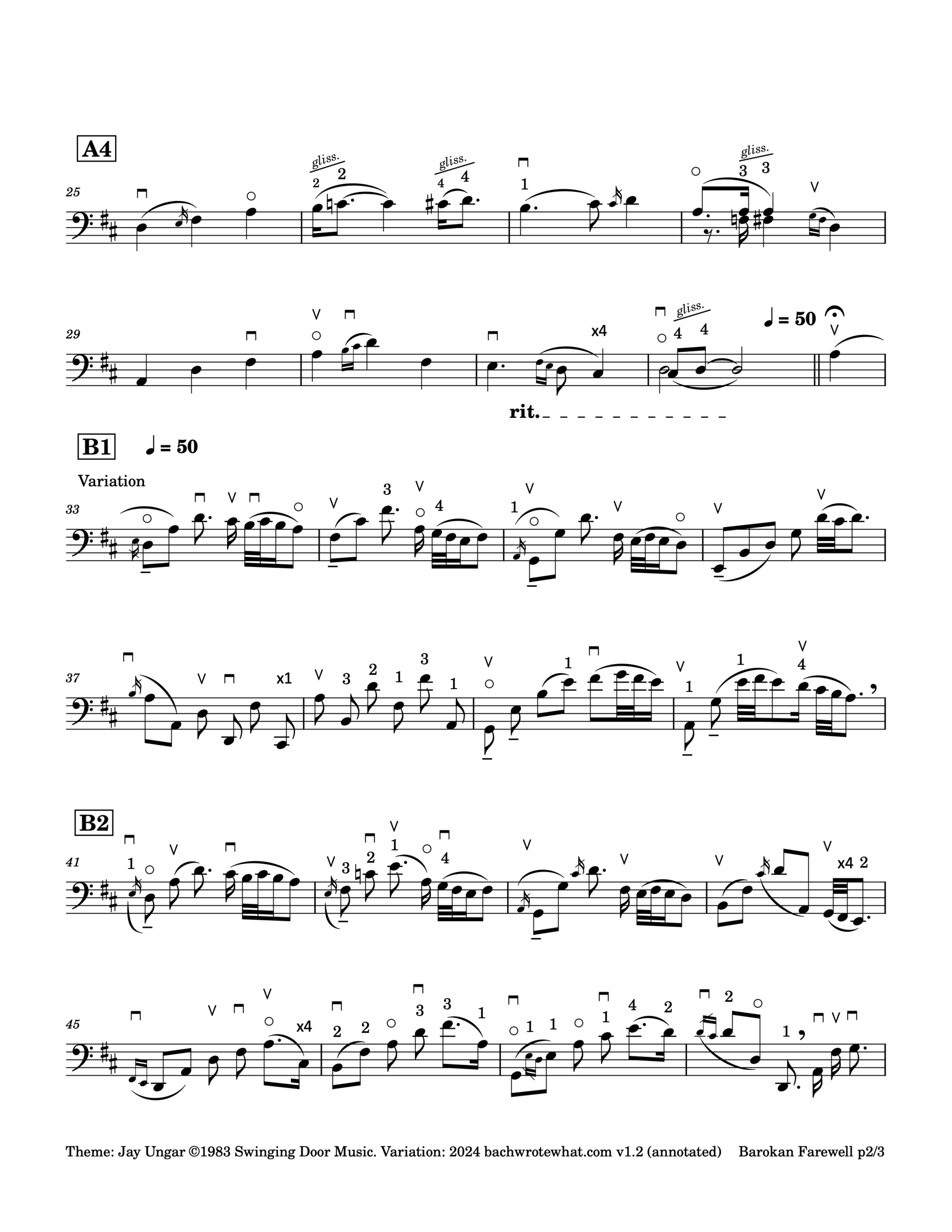
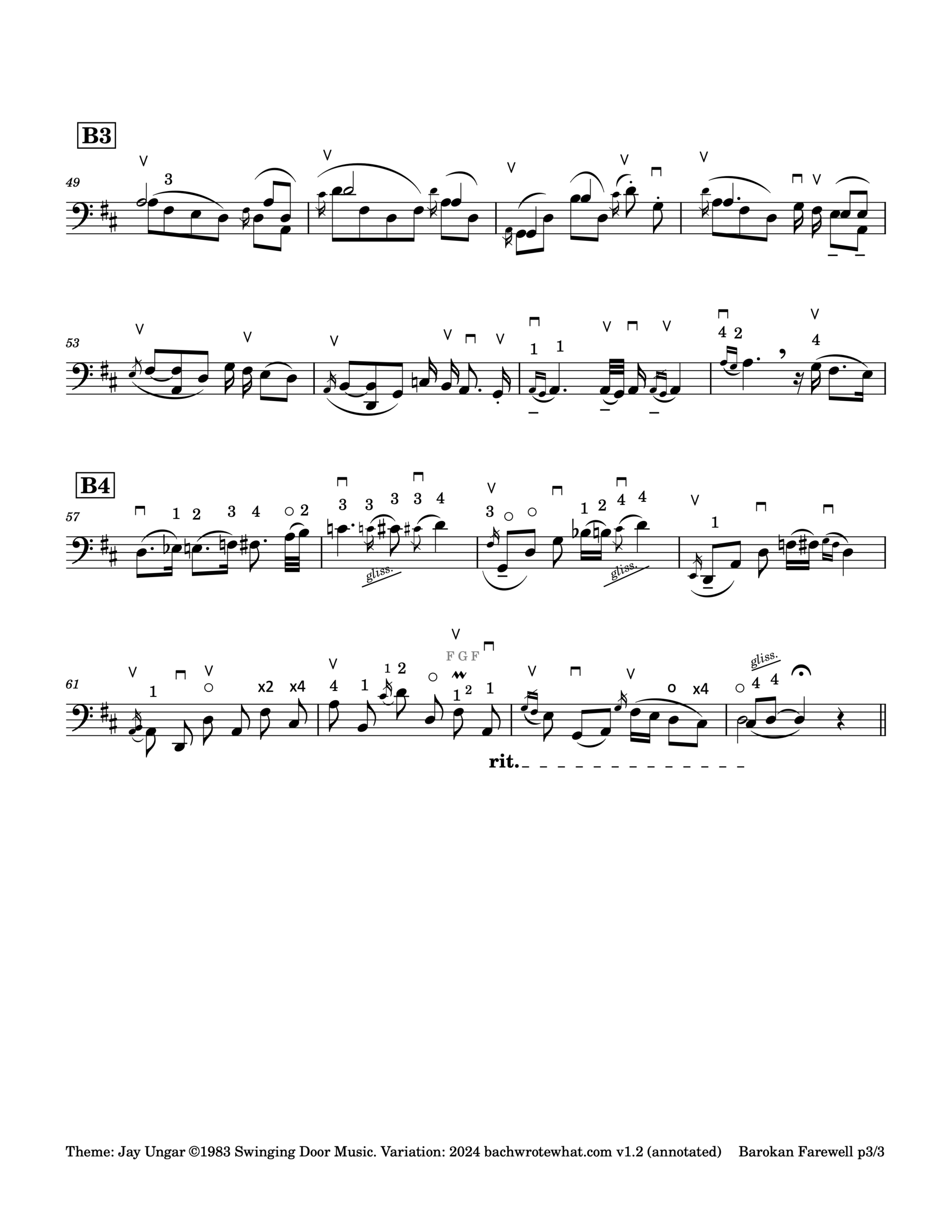
The original key of D major works just fine on the cello, with no need to transpose it to another key. Still, the recomposer felt the tune sounds best played an octave lower on the instrument. That choice was about tone and resonance, not necessarily because the recomposer himself couldn’t manage the whole thing on the A string in strenuous high positions, the way some accomplished cellists do.
Sheet music for the original Ashokan Farewell is available from Jay and Molly’s online store. You’ll find arrangements for flute and choir, harp, handbells, guitar, piano, violin and piano, string orchestra, and four-part choir… but none for solo cello. The copyright for Ashokan Farewell belongs to Jay Ungar. © 1983 Swinging Door Music (BMI).
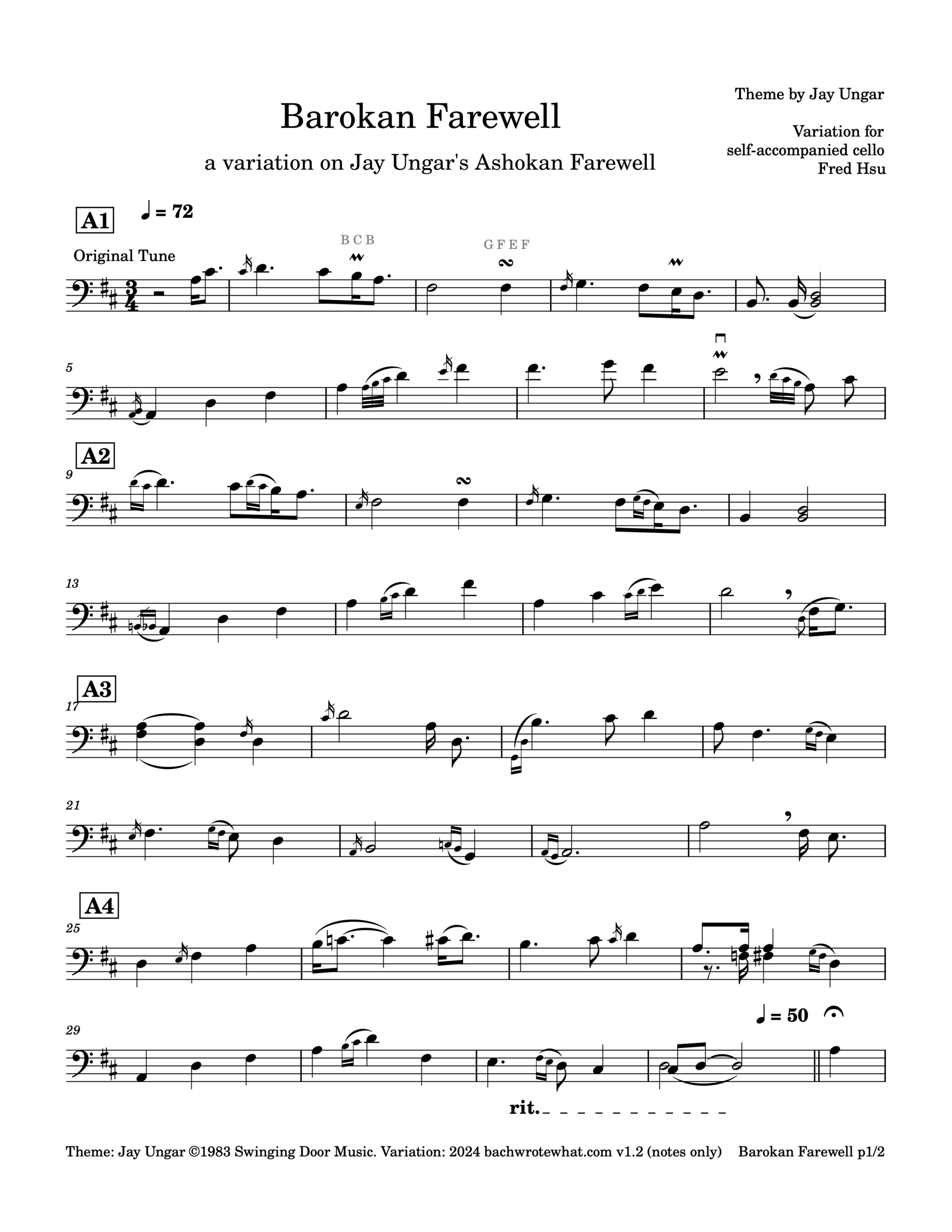
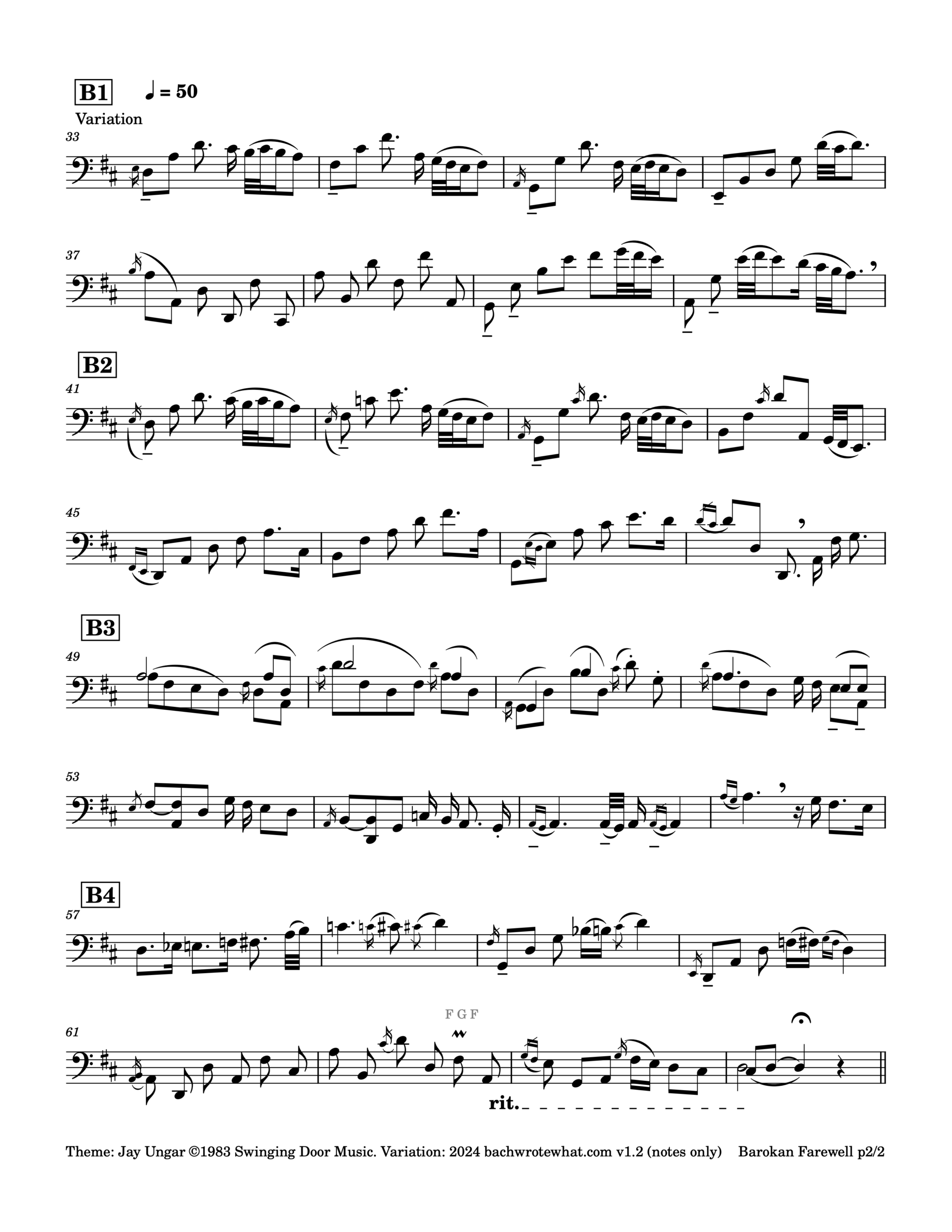
If you are an advanced cellists, you will want to find your own slurrings, bowings and fingerings. See below clean sheets with (mostly) only notes. Both PNG and PDF versions are available.
Plenty of people play Ashokan Farewell on the cello, usually with accompaniment from other instruments. Here’s a moving arrangement for cello, guitar, and violin. This particular YouTube video can’t be embedded here, so you’ll need to click on the link to watch it.
Cellists naturally tend to play this tune an octave lower, as Daniel Plane does here. He talks about what it means for Ashokan Farewell to be a danceable waltz. Daniel also adds a bit of self-accompaniment along the way in this demonstration.
Some cellists take the tune at a slower pace. Here, Kayson Brown plays it beautifully at almost half speed. Perhaps that kind of spaciousness simply suits the cello as an instrument. This medley splices Ashokan Farewell with a double-stop rendition of the hymn ’Til We Meet Again, and we think it makes a great showcase for self-accompanied cello playing.
Now for a string quartet version of Ashokan Farewell. This one is played by the family behind Fiddlershop, a string instrument shop based in South Florida.
Next is a quintet version featuring 4 clones of cellist Clay Ruede, plus his daughter on violin. Clones and daughter are introduced after a cello solo.
Here’s a cello-and-piano version, where the two instruments take turns leading and accompanying each other throughout.
Here’s a jazzy arrangement for cello and piano by Lew Scharpf. There aren’t any other sources besides the SoundCloud link above. Just close the pop-ups, ignore the occasional ads, and enjoy the music.
Most classical cellists don’t play this tune the way Jay and other folk musicians do. This crash course on folk cello helps demystify those differences. Pay special attention to the section on “Ornaments” at 7:46.
Here’s Ilia Laporev’s take on the tune. As mentioned earlier, he plays it in the original octave, a feat this recomposer can’t replicate.
Happy fiddling.
Leave a Reply